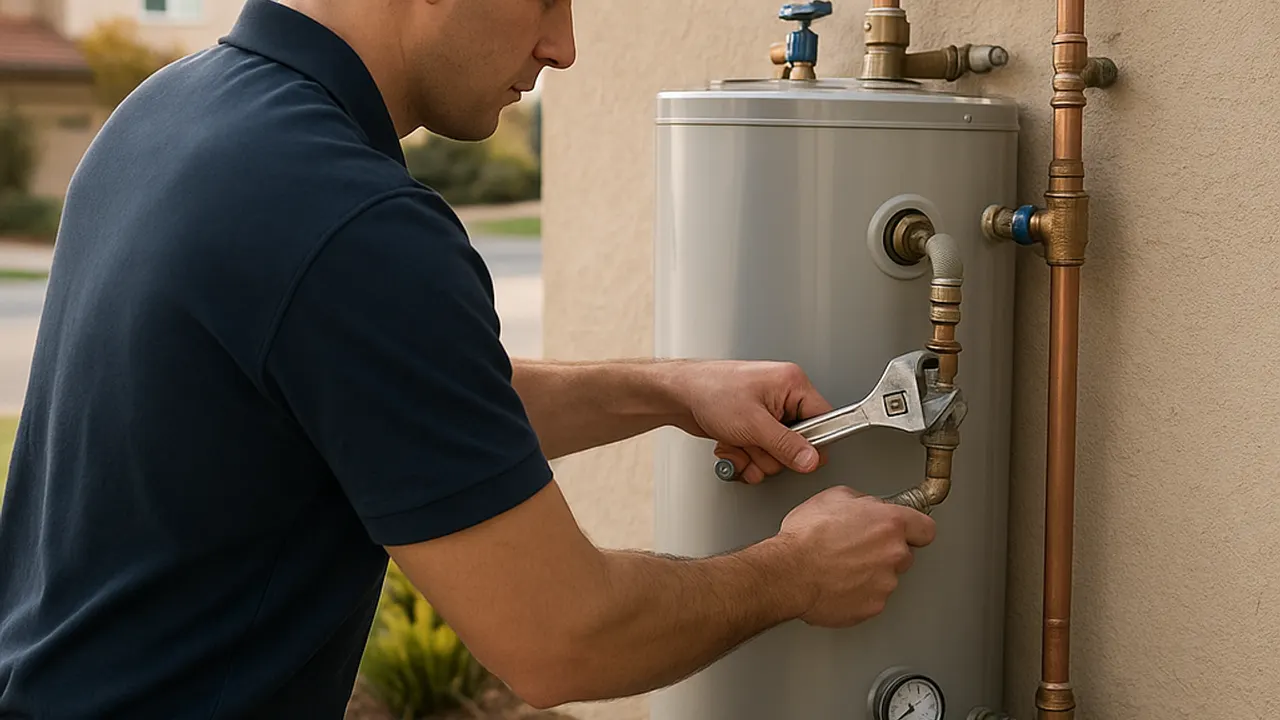
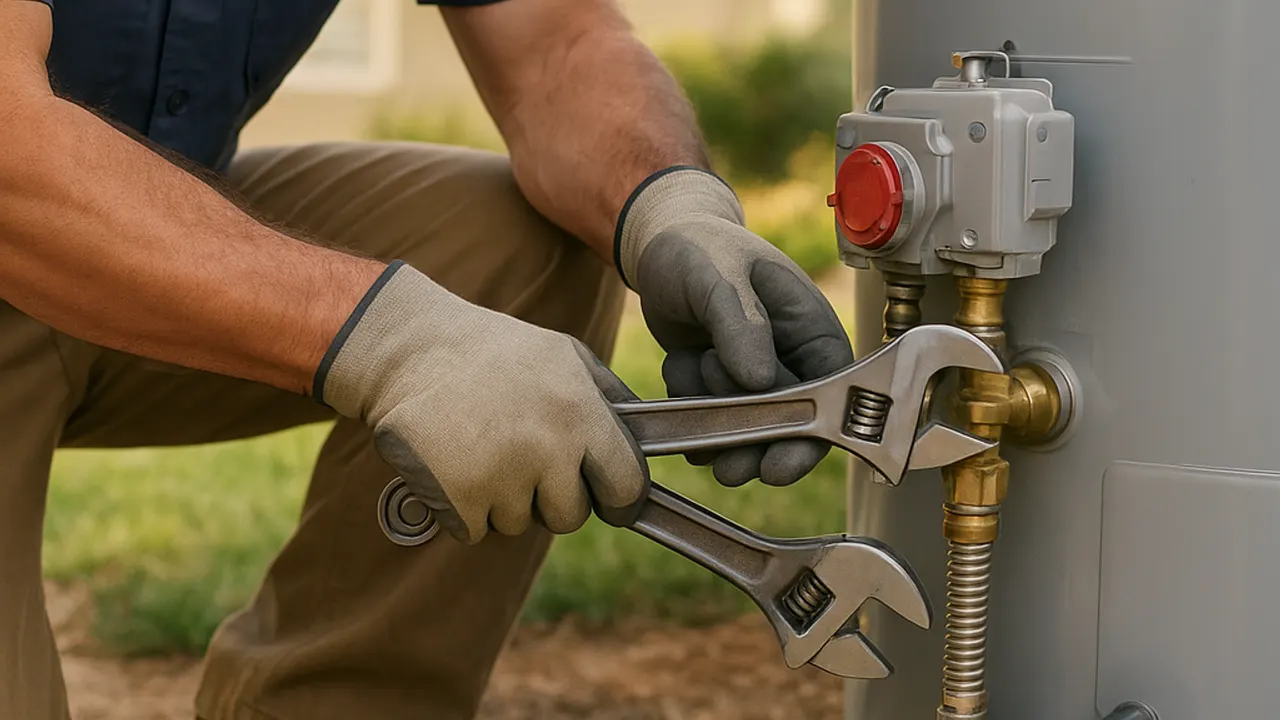
Why is my water heater making popping noises
That popping, rumbling sound coming from your water heater is almost always sediment boiling under the burner. Here is why it happens in Downey and how to stop it.
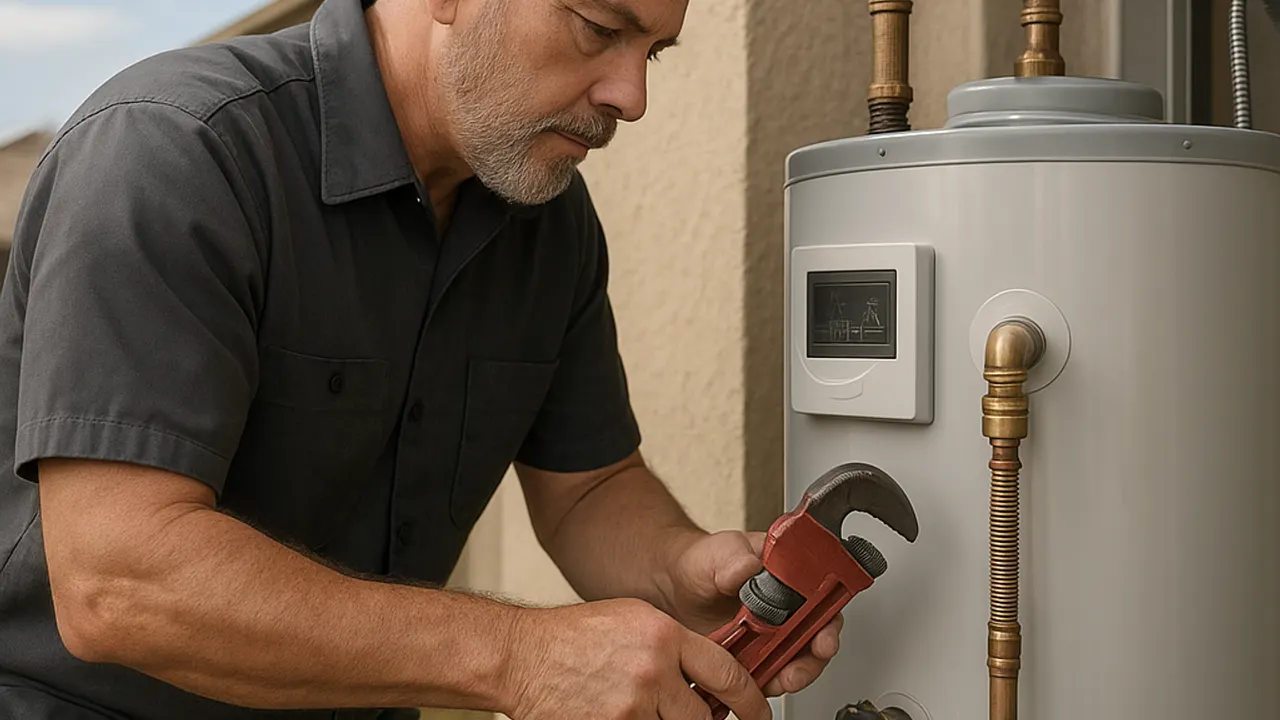
A popping noise from your water heater means sediment has built up on the bottom of the tank and water is boiling underneath it. Every time the burner fires, trapped moisture flashes to steam under that mineral crust, and the steam pushes up through the sediment - that is the pop you hear. A water heater making popping noise in Downey CA is one of the most common calls we run, and in most cases the tank is not dying yet. It needs a flush, and it needs it before the sediment hardens into a rock-like layer that eats through the steel.
Below we cover what the sound actually is, why Downey's water makes it worse than most cities, how to tell popping apart from other noises, and what a real fix looks like in 2026.
What the popping sound actually is
A water heater popping noise is the sound of steam escaping through a layer of mineral sediment that has settled on the tank floor. It is not a mechanical failure and it is not the tank cracking. It is physics.
Here is the sequence. Downey's municipal water carries dissolved calcium and magnesium. When the tank heats that water, those minerals drop out of solution and settle on the bottom as scale. Over months, that scale builds into a crust. The burner sits directly under that crust and keeps firing. Water trapped between the crust and the steel floor hits 212°F, turns to steam, and forces its way up through the sediment. Pop. Then again. Then again, every heating cycle.
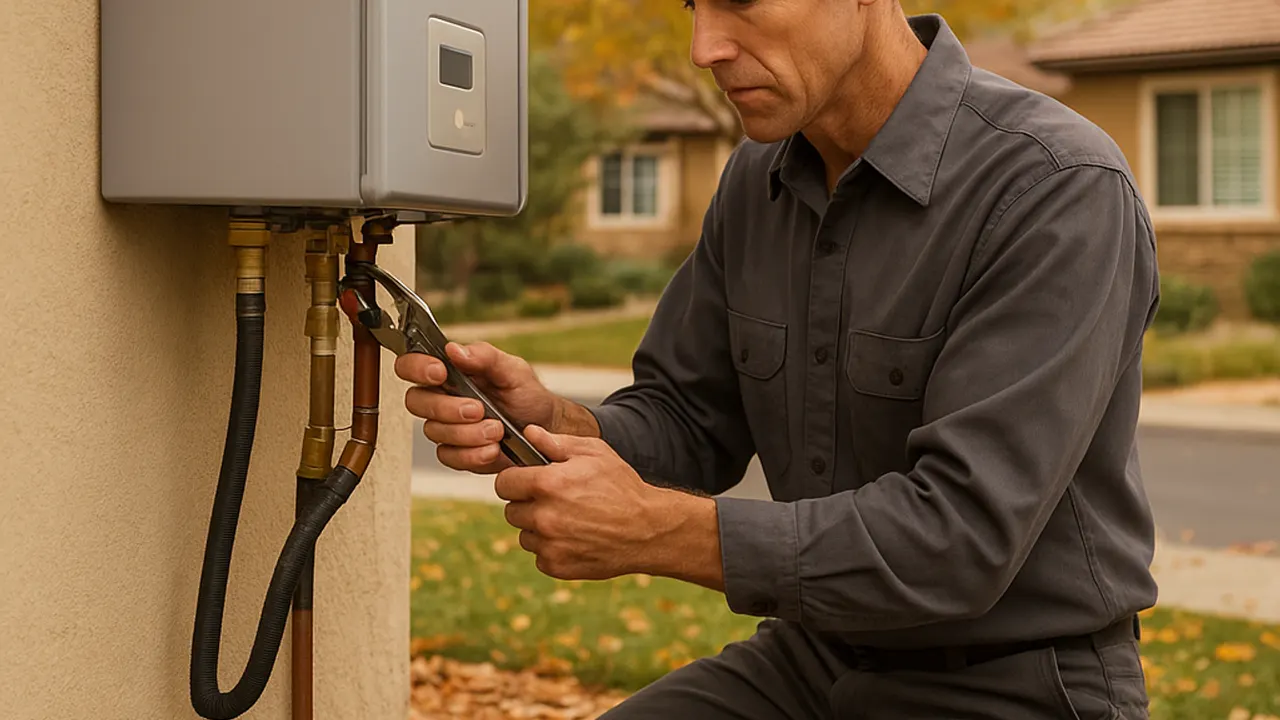
Tankless units do the same thing on a smaller scale - scale builds on the heat exchanger and you get a rumbling or kettling sound instead of a pop. If your tankless unit is the one making noise, our team handles Tankless Water Heater Repair Downey CA with a descaling flush that dissolves the scale instead of chipping at it.
Two numbers matter here. Sediment starts becoming audible at roughly 1/8 inch of buildup on a gas tank. And once that layer passes 1/2 inch, the tank floor starts overheating and the steel begins to fatigue.
Why Downey water is hard on water heaters
Downey sits on some of the hardest water in Los Angeles County, and that single fact explains most of the popping calls we get. Hardness here runs in the 10 to 14 grains-per-gallon range depending on the zone and the season. Anything above 7 grains is considered hard. We are roughly double that.
What that means in practice: a 50-gallon gas tank in Downey can accumulate enough sediment to start popping in 12 to 18 months, not the three to five years you would see in a softer-water city. Homes on the east side of town, closer to the older distribution lines, tend to build scale faster than newer construction.
We see this constantly in the older blocks around Water Heater Repair in Downtown Downey, where a lot of the housing stock dates to the 1940s through 1960s and the original plumbing has been patched more than once. Those tanks rarely get flushed on schedule, and the sediment layer is usually thick by the time we open the drain valve.
Three conditions speed sediment up:
- High incoming hardness - Downey's baseline, roughly 10-14 grains per gallon.
- High tank temperature - setting the thermostat above 140°F accelerates scale formation.
- No annual flush - the single biggest factor, and the easiest to fix.
How to tell popping from other water heater noises
Not every water heater noise is sediment, and treating the wrong one wastes your money. Here is how to sort them out by ear and by symptom.
Popping or crackling
Sharp, irregular pops that happen while the burner is running. This is sediment. It gets louder as the tank heats and quiets down when the burner shuts off. This is the one a flush fixes.
Rumbling or a low boiling sound
A deeper, continuous rumble is the same sediment problem at a more advanced stage - the crust is thick enough that heat cannot escape into the water at all. A water heater rumbling noise in Downey almost always means the layer has passed the point where a simple flush will clear it.
Banging or hammering
Sharp bangs are usually water hammer in the pipes, not the tank. That is a plumbing issue upstream, often a loose pipe strap or a failing pressure-reducing valve.
Whistling or screeching
High-pitched noise points to a restricted inlet, a failing dip tube, or a partially closed valve. Different repair entirely.
If you are not sure which one you are hearing, describe it to us over the phone and we can usually narrow it down in under a minute. We have done this enough times in Downey to know the difference by description alone.
Does a water heater flush fix popping noises?
Yes - a proper flush eliminates the popping in the large majority of cases, provided the sediment has not hardened into a solid layer. A water heater popping fix Downey CA homeowners get from us is almost always a drain-and-flush, sometimes paired with a new drain valve if the original one is clogged or seized.
Here is what the job actually involves, so you know what you are paying for:
- Shut off the gas or power and the cold-water supply.
- Connect a hose to the drain valve and run it to a safe discharge point.
- Drain the full tank - this alone removes loose sediment.
- Open the cold inlet in short bursts to stir up and flush out the packed scale at the bottom.
- Repeat until the water runs clear.
- Refill, purge air from the tank, and relight the burner.
- Test the thermostat setting and confirm the popping is gone on the first full heating cycle.
Typical 2026 pricing in this area runs $150 to $300 for a standard tank flush, and $250 to $450 if the drain valve needs replacing or the sediment is heavily packed. The whole job takes 60 to 90 minutes on a standard 40- or 50-gallon tank.
If the drain valve is the thing that is stuck or dripping, that is its own repair - we handle Water Heater Drain Valve Repair Downey CA as a same-visit add-on so you are not paying for two trips.
One honest caveat: if the sediment layer has already hardened into a solid mass, a flush will not break it up. At that point the tank floor has usually been overheating for months, and replacement becomes the smarter money. We will tell you which one you are looking at before we start, not after.
What happens if you ignore the popping
Ignoring the noise does not make it go away - it shortens the tank's life by years. Here is the failure chain we see over and over.
First, the sediment insulates the tank floor from the water. The burner keeps firing at the same rate, but less heat transfers into the water, so the tank runs longer to hit temperature. Your gas bill climbs 10 to 20 percent and you may not connect it to the noise.
Second, the steel floor overheats. Water heater steel is glass-lined, and that lining cracks under repeated thermal stress. Once the lining fails, the bare steel is in direct contact with hot, mineral-rich water. Rust starts.
Third, the tank leaks. A leaking water heater is not a slow, polite failure - a pressurized 50-gallon tank can put 40 to 50 gallons on your floor in a matter of minutes. If the tank sits in a garage, you lose tools and stored items. If it sits in a closet or attic, you are looking at drywall, flooring, and possibly mold remediation.
Fourth, the anode rod is already gone. The anode is the sacrificial rod inside the tank that rusts so the steel does not. In Downey's water, a standard magnesium anode is consumed in roughly 3 to 5 years. Once it is gone, the tank itself becomes the sacrificial metal. Most homeowners have never had theirs checked.
The math is simple. A $150-$300 flush every 12 months versus a $1,200-$2,500 replacement plus water damage. We know which one we would pick.
Common mistakes we see on popping water heaters
We get called to fix problems that started as small mistakes. These are the ones that come up most in Downey.
Turning the thermostat up to compensate
When the tank runs out of hot water faster because of sediment, the instinct is to crank the dial. That is exactly backwards. Higher temperature means faster scale formation and more stress on the tank floor. If anything, drop it to 120°F while you wait for the flush.
Opening the drain valve on a tank that has never been flushed
The drain valve at the bottom of the tank sits right in the sediment. On a tank that has gone years without a flush, that valve is often packed solid. Crack it open and it may not reseal - now you have a dripping valve and a tank full of hot water. We see this several times a month.
Flushing with the burner still on
Draining a tank while the burner is firing can crack the tank or the flue. Always shut the gas or power off first and let the tank cool for at least 30 minutes.
Skipping the anode rod
A flush without an anode check is half a job. The rod is a $30-$60 part and takes ten minutes to swap. Skipping it is the reason a lot of tanks fail at year six instead of year twelve.
Assuming a new tank means no maintenance
A brand-new water heater in Downey starts building sediment on day one. The first flush should happen at the 12-month mark, not year three. If you want a schedule that actually matches Downey's water, our Water Heater Maintenance Downey CA plan covers the annual flush, anode inspection, and thermostat check in one visit.
When to call a professional
Call us when the popping has been going on for more than a few weeks, when you see rust-colored hot water, or when the tank is over eight years old. Those three signals together usually mean the sediment has already done structural damage and a flush alone will not save it.
Also call if you hear the popping and see any moisture around the base of the tank. That combination - noise plus water - is a tank that is on its way out, and the sooner we look at it, the more options you have.
Heating Techno Pros works across Downey and the surrounding corridors. We diagnose on the first visit, quote the flush or the replacement in plain numbers, and get it done the same day in most cases. If your tank is in a tight closet or an older home with original plumbing, we have seen that setup hundreds of times and we know how to work around it without tearing up your walls.
If you are in one of the newer builds out near the Water Heater Repair in Downey Landing, your tank is probably still under warranty - bring that up when you call and we will factor it in.
Frequently Asked Questions
Why is my water heater making popping noises in Downey CA?
Sediment - mostly calcium and magnesium from Downey's hard water - has settled on the tank floor, and water is boiling under it. Downey's water runs 10 to 14 grains per gallon, so this builds up in 12 to 18 months on an unflushed tank.
Is it normal for a water heater to make popping sounds in Downey?
It is common, but it is not normal. Popping means sediment is already thick enough to trap steam. A healthy tank running clean water is nearly silent. If you hear it, schedule a flush within the next few weeks.
How do I stop my water heater from making popping noises in Downey California?
Drain and flush the tank to remove the sediment, replace the anode rod if it is depleted, and set the thermostat to 120°F. Then flush every 12 months. That combination stops the noise and adds years to the tank.
Does a water heater flush fix popping noises in Downey CA?
Yes, in most cases. A full drain-and-flush clears the sediment in 60 to 90 minutes and the popping stops on the first heating cycle. If the sediment has hardened into a solid layer, the tank usually needs replacement instead.
How much does it cost to fix a popping water heater in Downey?
Expect $150 to $300 for a standard flush in 2026, or $250 to $450 if the drain valve needs replacing or the sediment is heavily packed. Replacement, if needed, runs $1,200 to $2,500 installed.
Get help with Water Heater Repair in Downey
If your water heater is popping, rumbling, or running out of hot water faster than it used to, we can diagnose it on the first visit and flush it the same day. Call Heating Techno Pros at 562-307-9980 and we will get your tank quiet again.